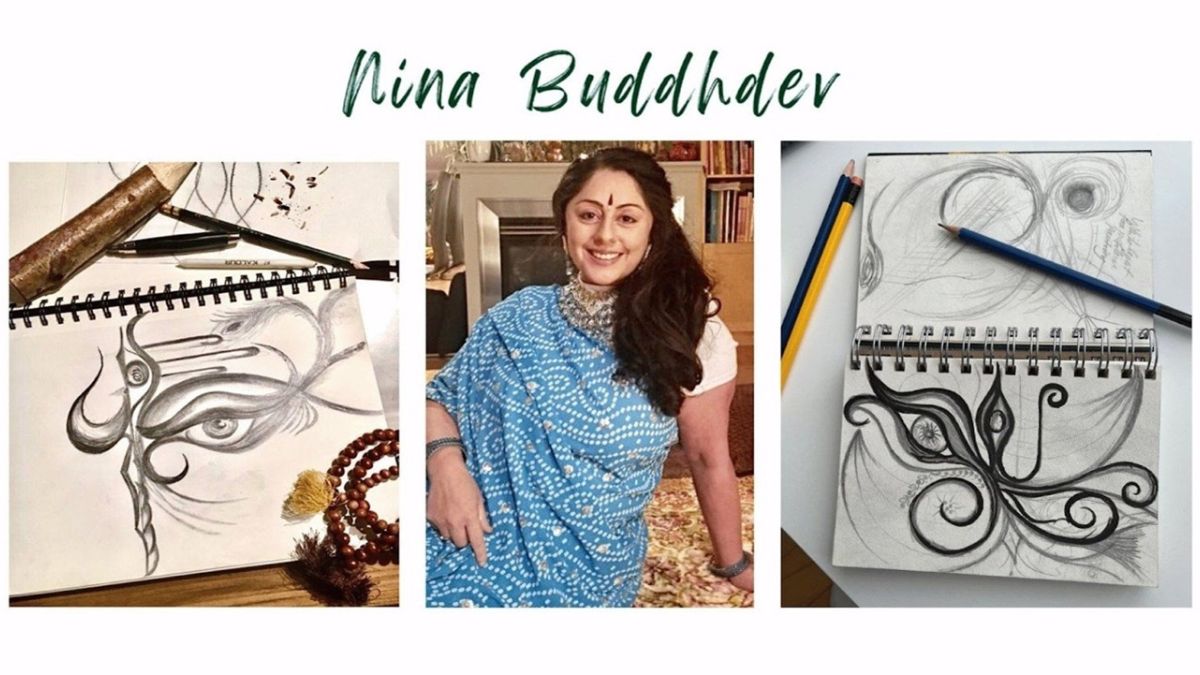
Nina Buddhdev: artist, healer, and the love that drives the work
“I wish I could show you, when you are lonely or in darkness, the astonishing light of your own being.”
— Hafiz
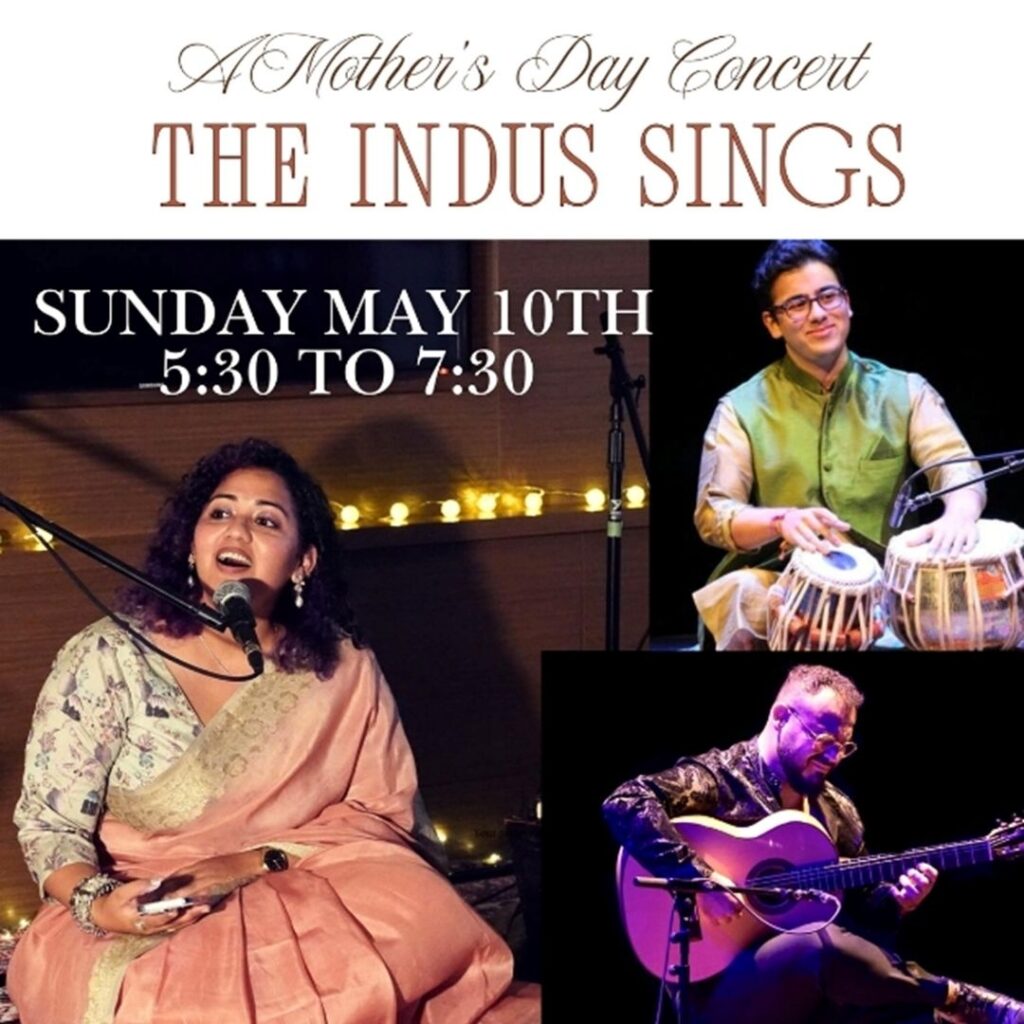
An evening of the ambition and specificity of The Indus Sings does not assemble itself. It requires someone with an unusual synthesis of artistic vision, logistical precision, deep cultural knowledge, and the kind of personal conviction that only comes from having skin in the game. Nina Buddhdev is that person. And this year, for reasons that are both deeply private and quietly visible to anyone paying attention, this Mother’s Day concert is something more than a cultural event. It is an act of love directed toward a woman who is no longer here to receive it.
Three years ago, Nina lost her mother, Mrs. Pushpa Panchmatia, wife of the late Champak Panchmatia. The loss arrived as losses do, with the force of the irreversible. And it arrived for someone who had already known what it means to lose a parent too soon: Nina’s father passed away when he was only fifty-nine. In the years since, she has found comfort, orientation, and a kind of surrogate warmth in the wisdom and affection of elders, including her godmother Sharda Baa, whose steady presence has been both anchor and light through the long work of building what the Bandish Network has become. From that ocean of grief, Nina did what artists do. She made something. She launched a tradition of Mother’s Day art concerts, each one a thanksgiving offered in the only language she has ever fully trusted.
AN ARTIST ROOTED IN THE SACRED
Nina Buddhdev is an interdisciplinary visual artist whose practice unfolds at the sacred intersection of heritage aesthetics, vibrational energy, and meditative storytelling. Her work is an invitation: a quiet yet powerful dialogue between ancestral memory and contemporary presence, offering spaces where reflection, introspection, and communal healing converge naturally, without effort, the way light finds a room.
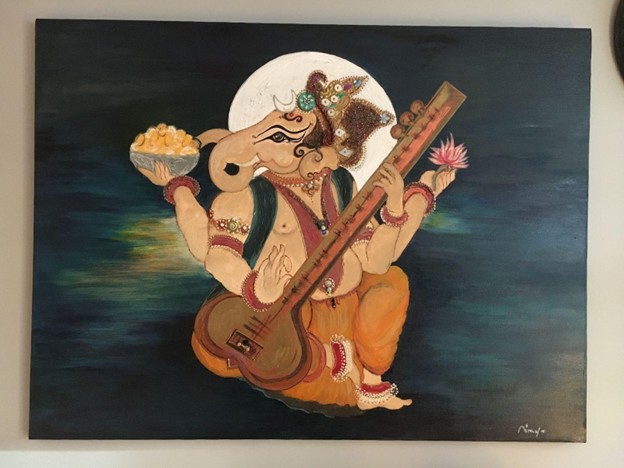
Through canvas, clay, mixed media, and immersive installations, she creates sensory sanctuaries that awaken inner awareness. Her work is guided by the timeless beauty of Indian classical aesthetics, spiritual symbolism, and diasporic lived experience, producing pieces that are both deeply personal and universally resonant. Portals to stillness, memory, and meaning. These are not merely artworks. They are living prayers, woven with intention, rhythm, and reverence.
A graduate of De Montfort University and the Int.Research Fellow of Royal College of Art, Nina’s artistic formation was shaped by extensive and historically grounded study: Indian classical music and dance, ancient scripts and folklore, temple sculpture, philosophy, and Shilpikari, the intricate art of sculpting divine forms, studied in Khajuraho, India. Her large-scale interior canvas works are layered with meditative communication, spiritual symbolism, and energy healing, designed to evoke a profound connection to consciousness. Her hand-built sculptural works channel the raw essence of ancient craft traditions while remaining in genuine conversation with contemporary aesthetics. Her mixed-media installations integrate organic textures, earthen materials, and intuitive storytelling to create immersive environments that function as both sanctuaries and sensory experiences.
Her work has been exhibited internationally, including at The Nehru Centre and the Barbican in London, and across Canada through private commissions, yoga-meditation programmes, and community performance-based events. Deeply rooted in Indian classical music, dance, Ayurvedic health, and ancestral arts, everything she makes is informed by ancient texts, folklore, and meditative traditions that she has spent a lifetime studying not as an observer but as a practitioner.
Nina views creative expression as a vibratory force that shapes behaviour, mindset, sensory capacity, and human connection. Her work is an ongoing dialogue between past and present, heritage and innovation, inviting audiences into a shared space of reflection, resonance, and reverence. Since settling in British Columbia, that work has found expression primarily through intimate cultural gatherings and private commissions. She is now seeking to share it more publicly, connecting with curators and communities who honour art not simply as an offering but as a living tradition: a vessel for transformation, a language of the soul, a bridge between what was and what is becoming.
TWENTY-ONE YEARS IN SERVICE
For over twenty-one years, Nina has devoted herself to the mentorship and empowerment of emerging artists, guiding them toward confidence, clarity, and voice. Many of them have since taken flight, carrying the seeds of her guidance into their own artistic journeys. It brings her immense joy to witness their evolution, to know that she has been part of their becoming.
Now, she finds herself at a turning point. One of return, of listening, of re-centring. As the artists she has nurtured soar into their own brilliance, she is answering a call to tend more deeply to her own creative wellspring. This is a sacred transition: from stewarding the paths of others to walking her own with greater devotion.
The work of producing and promoting is, she will tell you with characteristic directness, a vulnerable space for someone who is at heart an artist, a writer, and an educator in healing practices. It is done with the love and energetic backing of her godmother and her spirit guides. That is not a figure of speech. It is a precise description of where she draws the courage to stand in public on behalf of work that is, for her, always and irreducibly personal.
THE HEALING ARTS INITIATIVE
Beyond the concert, Nina leads The Healing Arts Initiative, a lineage-rooted, interdisciplinary healing framework dedicated to the ethical stewardship of sound, movement, and visual interpretative arts as therapeutic practices. Grounded in Vedic sciences and informed by contemporary research in nervous system regulation and embodied cognition, the initiative restores depth, coherence, and cultural integrity to a field that has too often been stripped of both.
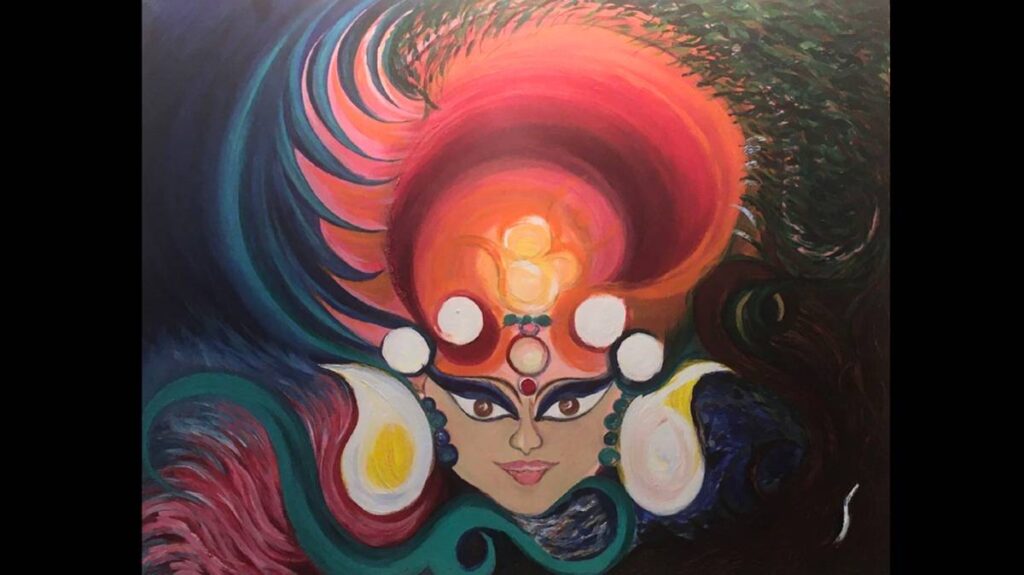
The initiative engages artists from a collective network of more than 7,400 cultural and lineage-rooted practitioners, unified by a shared commitment to preserving the authenticity of ancient healing practices while translating them responsibly for present-day contexts. Offered as a joint project in partnership with the Canada India Network Society and The Bandish Network, the work is guided by cultural accuracy, historical continuity, qualified delivery, and ethical responsibility, ensuring that healing practices are neither diluted nor removed from their original intelligence.
Together, raga sound healing, Indian classical dance as yogic practice, and YogKala form a coherent healing ecology. These practices are not offered as isolated modalities but as interrelated pathways that reinforce one another, supporting deep listening, embodied integration, and reflective expression. The Healing Arts Initiative does not position these practices as hybrid wellness trends. They are stewarded as living knowledge systems, offered with restraint, cultural responsibility, and interdisciplinary rigour.
The initiative invites participants into a state of deep listening, embodied presence, and visual integration, where sound becomes movement, movement becomes form, and healing unfolds as remembrance.
Next week: Where Poetry Breathes. The artists behind The Indus Sings and the musical conversation that crosses traditions without erasing them.