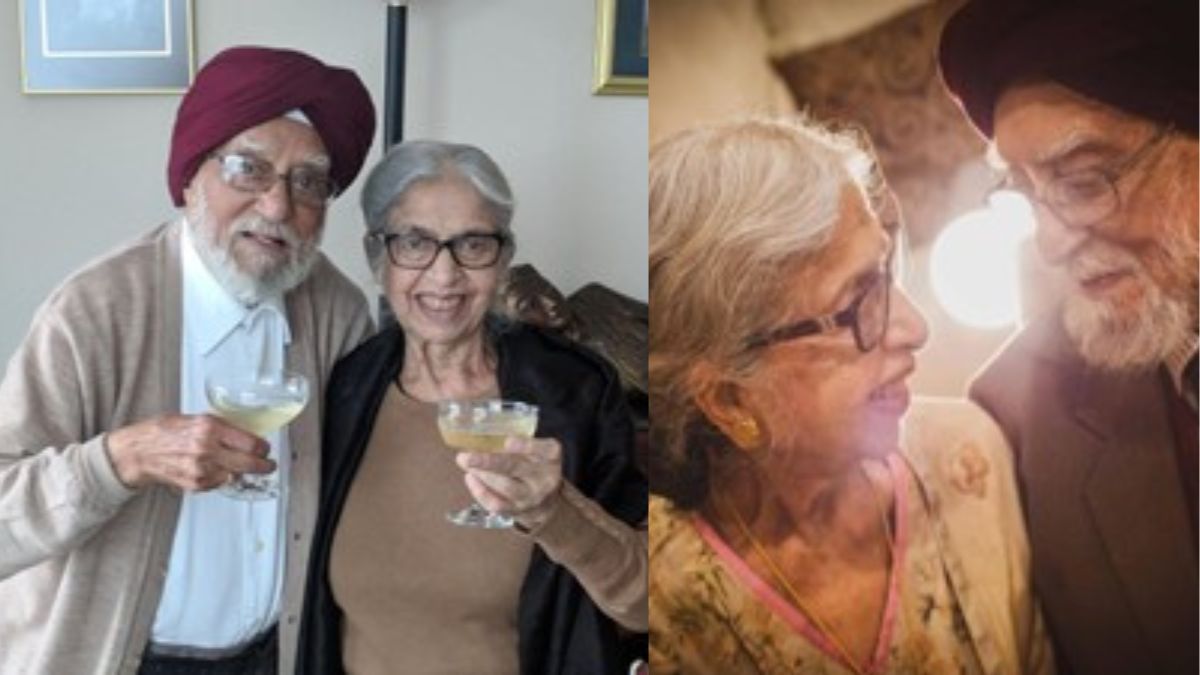
How Daljit Aunty and the Late Pritam Singh ji built community before the infrastructure existed
“How far that little candle throws his beams. So shines a good deed in a weary world.” — William Shakespeare
In the late nineteen seventies, if a South Asian family in British Columbia wanted their child to learn classical Indian music, there was no institution to call. No conservatory, no cultural centre with a dedicated programme, no directory of teachers operating within any formal structure. What existed were individuals: musicians who had brought their training across oceans and were willing, in the hours between paid work and family life, to pass it on.
The infrastructure of diasporic cultural life in those years was built almost entirely by hand. Living rooms became rehearsal spaces. Community halls, borrowed for a Saturday afternoon, became concert venues. The India Music Society, established in those foundational years, became one of the most important institutions that most Canadians have never heard of.
Daljit Aunty was among its architects.
SHOWING UP BEFORE IT WAS EASY
To understand what Daljit Aunty represents, you have to understand the particular kind of courage that settlement demands. Migration is not only a physical relocation. It is a negotiation between everything you carry and everything the new place asks you to leave behind. For the generation that arrived in British Columbia in the sixties and seventies, that negotiation was conducted without institutional support, without the vocabulary of multiculturalism that would later become official policy, and without any guarantee that what they were trying to preserve would survive the crossing.
Daljit Aunty and her late husband made a choice that many of their generation made, though rarely with such sustained commitment. They chose to build. Not the spectacular, ribbon-cutting kind of building that gets commemorated in annual reports. The unglamorous kind. The kind that requires showing up to the same meeting in the same borrowed hall for years before anything resembling a programme takes shape.
Their contributions to the India Music Society were not the contributions of distant patrons writing cheques from the safety of success. They were the contributions of people who were themselves navigating settlement, raising children, building careers, and simultaneously asking themselves what would be lost if no one took responsibility for cultural transmission.
“Care sustained over time becomes structured. Memory held collectively becomes continuity.”
The answer they arrived at was: everything. And so they stayed.
WHAT CHILDREN LEARNED IN THOSE ROOMS
Children who came through the India Music Society in those years learned ragas and rhythmic cycles. They learned taal and the discipline of classical form, the patience required to sit with a phrase until it yields its interior logic, the relationship between the mathematical and the devotional that lies at the heart of Hindustani tradition.
But they also learned something that resists easy description. They learned how to belong. How to carry an identity that felt whole rather than divided. How to be from somewhere, and still be from here. The music was the medium. The message was continuity.
From the Gujarati poet Narsinh Mehta comes a line that has echoed through this tradition for centuries:
Vaishnav jan to tene re kahiye je peed paraayi jaane re. — Narsingh Mehta
A true human being is one who understands the pain of others. In those borrowed halls, understanding the pain of displacement and choosing to do something about it was the founding act.
A MODEL OF LEADERSHIP WORTH STUDYING
Daljit Aunty’s stewardship represents a mode of leadership that contemporary institutions are only beginning to theorise but that communities have known for generations. It is rooted not in visibility but in consistency. Not in the ethics of announcement but in the ethics of presence. Not in seeking the spotlight, rather, in understanding that certain kinds of work only survive if someone is willing to do them without it.
In an era that measures influence by reach, impact by metrics, and significance by coverage, this form of leadership is systematically undervalued. It leaves almost no documentary trace. It does not generate press releases or keynote invitations. It generates communities. It generates people who know who they are.
Care sustained over time becomes a dependable structure. Memory held collectively becomes continuity. These are not merely poetic observations. They are an accurate description of how Daljit Aunty’s decades of faithful work have shaped the lives of everyone in the community she helped to build, including the people who will take the stage at the Evergreen Cultural Centre on May 10th.
Next week: The Leader Who Inherits Without a Map. How Mithila Karnik-Adarkar carries forward a legacy that was never formally written down.
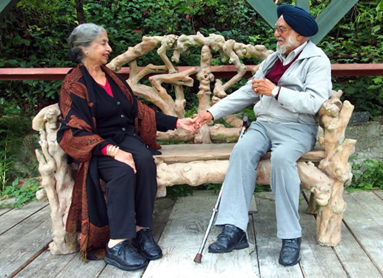
About late Pritam Singh ji, Rudyard Kipling wrote that East is East and West is West, and never the twain shall meet. Pritam Singh spent his life proving otherwise. Born in India, formed by the British administration in Hong Kong, and finally rooted in Canada, he moved through cultures not as a visitor but as a native of each, carrying his elegant turban and his infectious curiosity into film societies, radio studios, kirtan gatherings, and the Foreign Correspondents Club with equal and unselfconscious ease.
He was, in the truest sense, a universal man. Inspired by the teachings of the Sikh Gurus yet unbound by convention, he understood Sikhism as what he called a universal religion, one whose spirituality lived not only in scripture but in music, in poetry, in the surprise of a stimulating conversation, in the beauty of an ordinary day lived with full attention. The secular and the sacred were, for Pritam, not in tension. They were the same cloth, differently folded.
His name means both lover and beloved. It suited him precisely. He gave others quiet permission to love what their souls were drawn to, to follow the beauty way without apology. And in return, life poured itself through him in the most marvellous ways.
The Creator has now harvested his creation. We give thanks for the singular offering that existence made to us in the form of Pritam Singh. Excerpt from the Bandish Network