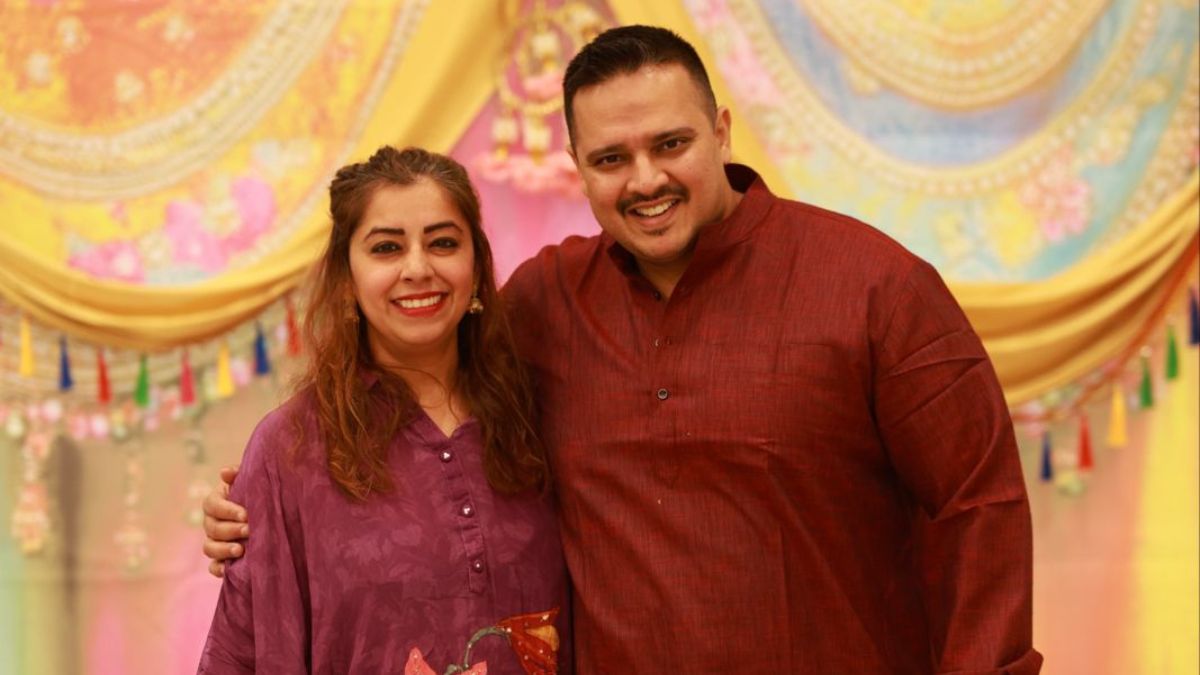
Mithila Karnik-Adarkar and the invisible architecture of a living legacy
“When you are inspired by some great purpose, all your thoughts break their bonds. Your mind transcends limitations.” — Patanjali
No one handed Mithila Karnik-Adarkar a blueprint. There was no formal transfer of responsibility, no official moment at which the work of one generation became the work of the next. What there was instead was something subtler and in many ways more powerful: a life spent in proximity to people who gave everything to a community without ever calling it sacrifice. That kind of formation leaves a mark that no curriculum can replicate.
Mithila is a young mother and civic leader based in Port Coquitlam. Through the South Asian Collective Society and the Level Up Women’s Leadership Program, she has built initiatives that respond with precision to the needs of a contemporary diasporic community. The spaces she creates are designed for immediacy. Connection is possible now, not after years of proving yourself deserving of belonging.

This is far from an accident. It is an intentional design choice rooted in a clear-eyed long range vision, of what the communities she serves actually need, and what the previous generation had to work so hard to build from nothing and with no building blocks to create upon, no informed mentorship or protection from the feelings of extraction.
THE INVISIBLE INHERITANCE
There is a form of inheritance that passes between generations without documentation. It is carried not in wills or institutional records but in the texture of daily life: the hours of meeting setup and follow-through, the relationships cultivated across differences of age and origin, the cultural transmission that happened in kitchens and rehearsal spaces before it ever happened in formal venues.
Mithila carries, without necessarily being able to name it, the accumulated wisdom of the women who came before her in communities like the one Daljit Aunty helped to build. She knows, at a level that precedes analysis, that community is not an event. It is a practice. It is the daily, repeated act of showing up, making space, and staying.
Where an earlier generation was preserved, Mithila expanded. Where earlier structures required physical proximity, hers adapted to the conditions people actually live in, shaped by migration at scale, digital life, and identities that resist easy categorisation. This is not a departure from tradition. It is tradition doing what it has always done: changing form while keeping faith.
“What does it mean to inherit without instruction? The answer is not found in declarations. It is found in practice.”
THE QUIET COMFORT WITH MULTIPLICITY
What strikes anyone who spends time understanding Karnik’s work is the absence of the tension that so often characterises conversations about diasporic identity. There is no sense of competing claims, no hierarchy between the professional and the maternal, the traditional and the contemporary, the inherited and the invented.
Motherhood and civic ambition coexist in her life not as a negotiated compromise but as a natural coherence. Home and community inform each other. Tradition is neither a weight to carry dutifully nor a relic to display carefully. It is a living language, spoken fluently and adapted as the conversation requires.
This quality is rarer than it appears. It is the product of having been formed, from early in life, by people who modelled exactly this kind of wholeness. The community Daljit Aunty helped to build did not teach its children that heritage and contemporary life were in conflict. It taught them that the work of holding them together was both possible and necessary.
THE COMMUNITY PHATAKA
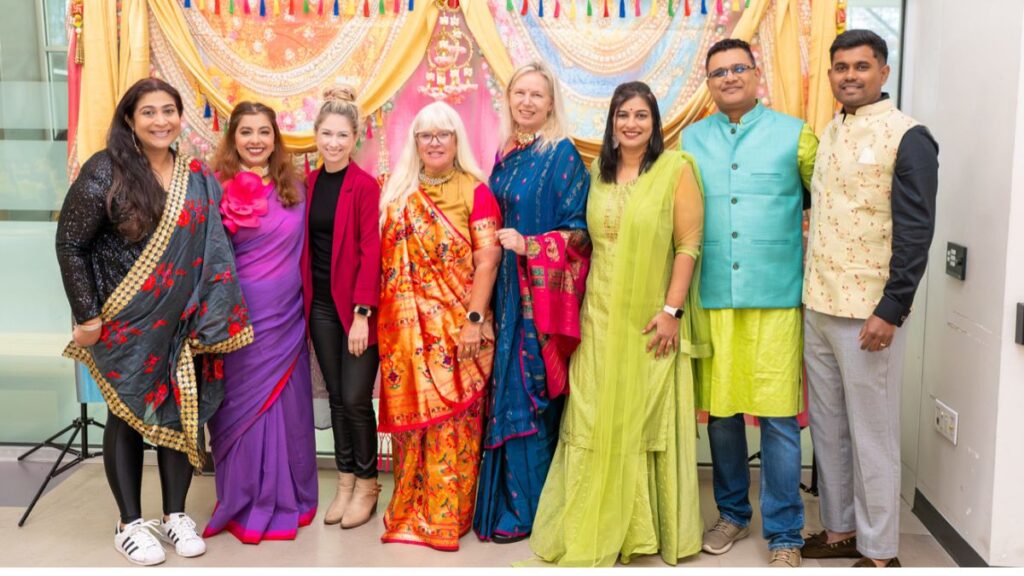
Within the community, Mithila has earned a nickname that captures something essential about her presence. She is the ‘phataka’, the firecracker: the person whose energy ignites a room, whose commitment to showing up with full force and full warmth has made her, in the span of a relatively short civic career, one of the most recognisable and relied-upon figures in Port Coquitlam’s South Asian community.
But beneath the energy is something quieter and more durable: a genuine understanding that the work of community is not about performance. It is about continuity. About making sure that the next person who walks through the door finds a room that is already warm.
Together, she and Daljit Aunty frame the concert’s deepest inquiry. Not as a panel discussion or a presentation but as a living demonstration. The infrastructure that one generation built, the next generation inhabits and extends. That is how culture survives. Not through monuments but through the people who carry it forward without waiting to be asked.
Next week: The Curator’s Hand. The story of Nina Buddhdev: artist, healer, curator, and the personal loss that made this concert a sacred offering.
Join us on May 10th at The Indus Sings: A Candlelight Mother’s Day Tribute in Shayari and Sufi Soul

Related Chapters: